NP Nithin Palal

About Nithin Palal

I am Nithin Palal. Much of what I write and explore revolves around a question: How do we understand the world and organise human life in a way that is intellectually honest, economically prosperous, ecologically sustainable and deeply meaningful?

I find myself approaching this question from different directions. An economic incentive can reveal something about human behaviour. A technological invention can raise a philosophical question. An ancient Indian text can offer an unexpected perspective on a contemporary problem. A coconut tree, a cow or even a cockroach can become a starting point for understanding something much larger.

I hold a Bachelor of Arts in Economics and an MBA with dual specialisations in Entrepreneurship Leadership and International Business. My formal education introduced me to markets, organisations and economic systems, but my interests have never been confined to a particular discipline.

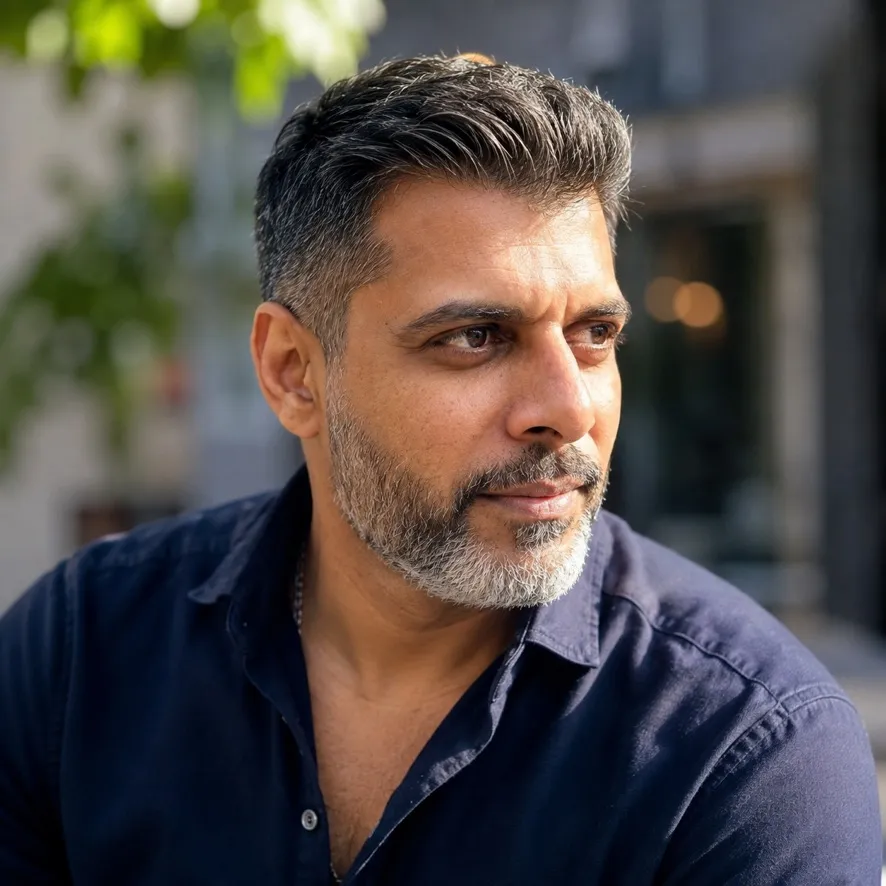
Portrait of Nithin Palal

I have written three books

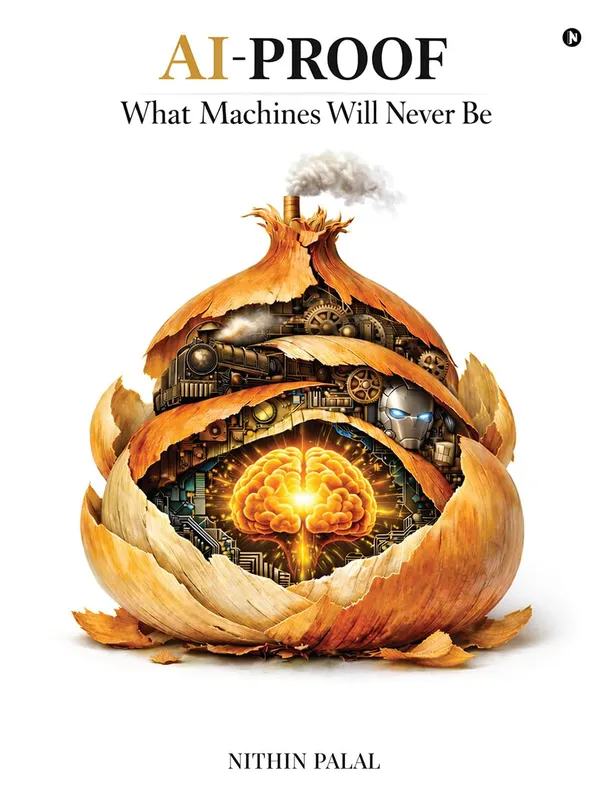
Cover of AI-Proof

AI-Proof

What Machines Will Never Be

Print edition, 2026. The online edition on this site is a later, rewritten version, titled What Machines Can Never Be.

An exploration of human uniqueness and the questions artificial intelligence raises about intelligence, creativity and humanity.

Buy on AmazonRead here · soon
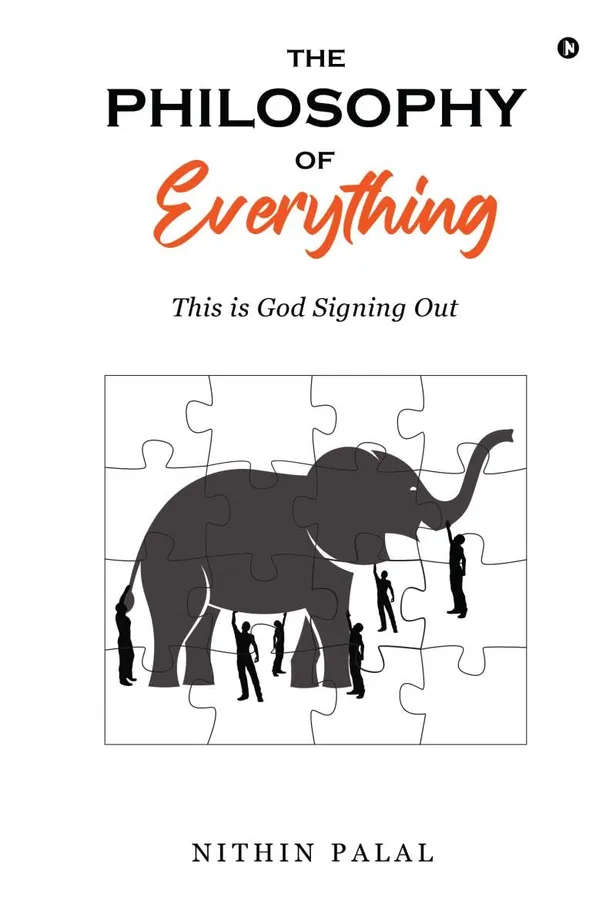
Cover of The Philosophy of Everything

The Philosophy of Everything

This is God Signing Out

Print edition, 2022. The online edition is a rewrite, titled The Philosophy of Everything: On the Pursuit of Happiness.

My reflections on existence, living and the fundamental principles through which I attempt to understand the world.

Buy on AmazonRead here · soon
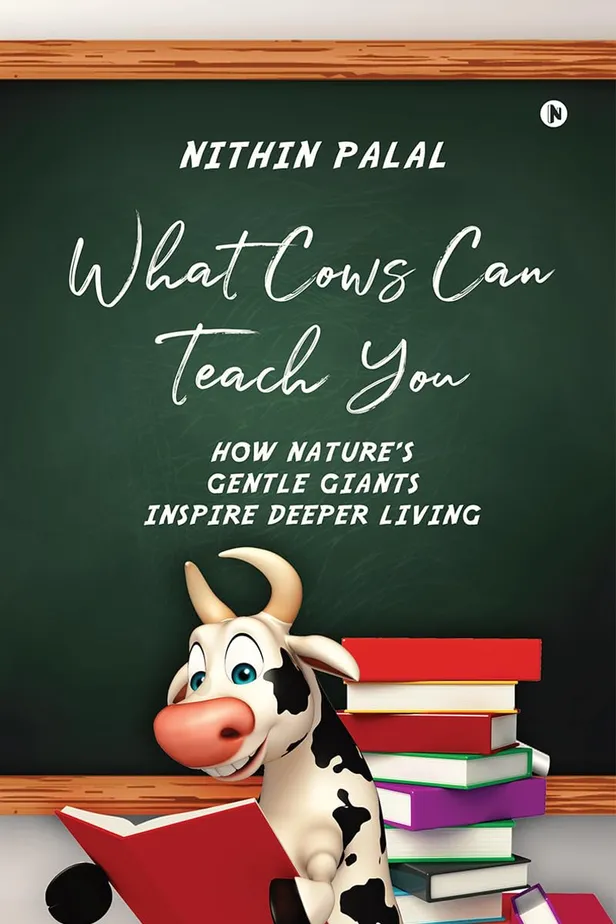
Cover of What Cows Can Teach You

What Cows Can Teach You

How Nature's Gentle Giants Inspire Deeper Living

An exploration of the insights and lessons that can emerge from observing nature and our relationship with other living beings.

Buy on AmazonRead here · soon

I also write novels, serialised on this site: 2084: An Algorithmic State and No Problem.

How I See the World

The Philosophy of Everything, written during the pandemic, is the closest expression of my personal worldview. It was an attempt to make sense of the world by looking beyond individual events and searching for the underlying principles connecting them.

One conviction that runs through my thinking is that life itself is an ongoing education. Experiences, failures, relationships, discoveries and ordinary observations can all change how we understand the world.

I am particularly interested in the tension between permanence and change: what remains fundamental in an existence that is constantly transforming? How do we distinguish enduring principles from assumptions that have simply survived without being questioned?

I believe intellectual traditions should be studied, respected and examined, rather than accepted or rejected wholesale.

India's philosophical heritage is an extraordinary starting point for this inquiry. From Sāṅkhya, Nyāya and Vedānta to Buddhism, Jainism and Cārvāka, its traditions offer different approaches to questions of consciousness, knowledge, reality, causality and existence. I am interested in bringing these ideas into conversation with contemporary science and philosophy, not treating them as museum pieces or unquestionable doctrines.

What Building a Company Taught Me

My interest in ideas has also taken me into entrepreneurship. Driven by a passion for sustainability, I founded SEV Technologies, a startup focused on carbon-tracking solutions.

The venture did not achieve the scale I had envisioned. But building something in the real world exposed me to the distance between an appealing idea and a viable solution. It taught me about uncertainty, market incentives, execution and the practical difficulties of translating good intentions into sustainable business models.

It also reinforced a question I continue to find important: should economic progress be measured only by what we produce, or also by how responsibly we use the resources that make production possible?

Tools That Free the Imagination

I have always viewed technology as an extension of human capability. The journey from the pen and printing press to the typewriter, computer, software and artificial intelligence represents something larger than technological advancement: humanity progressively overcoming the limitations of its own tools.

I wrote novels long before generative AI existed. Today, I use AI extensively for research, drafting, editing, identifying continuity errors in manuscripts, managing my website and producing content. Tasks that once required several people and considerable time can increasingly be handled by an individual equipped with the right tools.

For me, AI is a collaborator and an instrument, not an authority. It helps me reduce the mechanical effort involved in creating, leaving more time for imagination, questioning, judgement and the development of ideas. What might humanity create when creativity is liberated from so much of the process traditionally required to express it?

Technology should work for humanity, not the other way around.

Why Books Are Not Enough

I have a particular interest in the relationship between knowledge and change. A book captures an argument, a perspective or an understanding at a particular point in time. But the world continues to change, and our understanding must change with it.

I don't see books and articles as competing forms. Books allow ideas to be developed in depth; articles allow them to respond more readily to new discoveries, developments and arguments. Together, they can form a continuously evolving body of knowledge.

This website is built around that belief: a living collection of ideas that can be questioned, expanded, challenged and revised.

How I write

  1. I begin with a question. If I already know the answer, there is usually no article in it.
  2. I show my sources. Every figure, quotation and claim carries a number that leads to where it came from. When I could not open a source myself, I say so.
  3. I weigh a source by what it shows, not by who owns it. Was the speaker placed to know? Does a record stand behind the claim? Does a second source agree? Is there anything that defeats it?
  4. I say who is real. Where a person in an article is imagined, or built from several people, the article says so.
  5. I use AI, and I answer for the result. It helps me research, draft, edit and check. The questions, the judgement and the responsibility are mine.
  6. I date what can change, and I correct what I get wrong. Articles on public affairs say "as of" a date. When I revise a piece, I say what changed.
An Ongoing Conversation

Philosophy, economics, science and artificial intelligence, Indian knowledge traditions, nature, and governance. What connects these subjects is not a desire to cover everything, but a belief that understanding anything deeply often requires looking beyond the boundaries of the subject itself.

I don't consider myself an authority on everything I explore. I am a student of the world, interested in investigating, experimenting, making mistakes and changing my mind when new evidence or better arguments demand it.

Navigate everything I explore →

Some questions I keep returning to are difficult precisely because they have no convenient answers:

  1. Can economic growth continue indefinitely within ecological limits?
  2. Does technological progress necessarily translate into human progress?
  3. How should ancient knowledge traditions engage with modern scientific inquiry?
  4. What makes institutions trustworthy?
  5. What will remain distinctly human as our tools become increasingly capable?

I write because the questions deserve to be explored. If you enjoy looking at familiar things from unfamiliar perspectives, I hope you will find something here worth questioning, discussing or taking further.

This is not a collection of final answers. It is an ongoing conversation with existence.

Dimāgī Sanātanī for Bhāratīyatā

Rooted in Bharat. Grounded in Sanātana. Driven by the pursuit of knowledge.

Bhārate jātaḥ sanātane pratiṣṭhitaḥ jñānānveṣaṇe nirataḥ.
Darśanapatheṣu sañcārī tantravidyā-premī. Praśnān śabdaiḥ svarūpayan.

A traveller on the paths of philosophy, a lover of technology, giving questions their form in words.